Your puppy has your favorite shoe in their mouth and is sprinting toward the couch. You shout “no!” but they keep running. You say it louder. Nothing. By the time you catch up, the damage is done.
Sound familiar? Here is the truth: repeating “no” louder and more often does not teach your puppy anything. To a dog who has never learned what the word means, it is just noise.
The good news is that teaching your puppy to actually respond to “no” is straightforward once you understand how dogs learn. With the right approach, you can turn this cue into a reliable way to interrupt unwanted behaviors, keep your pup safe, and yes, save your shoes.
This guide shows you exactly how to do it using positive reinforcement methods that build trust rather than fear. Whether you are new to dog training or frustrated that nothing seems to work, these steps will help.
Is It OK to Tell a Puppy No?
Yes, teaching your puppy an interrupter cue (whether you use “no,” “leave it,” or another word) is an essential part of basic dog training. When your dog understands this cue, they can avoid dangerous situations and learn appropriate household boundaries.

The key is how you teach and deliver the cue. Modern dog training science emphasizes that:
- Timing matters: Say “no” the moment your puppy begins an unwanted behavior, not after
- Tone should be calm but firm: Yelling can create fear and damage your relationship
- Always pair with redirection: Tell your puppy what to do instead, not just what to stop
Just as children need to understand boundaries, puppies need to learn house rules too. The moment you bring your pup home, you should begin teaching what is acceptable and what is not, using methods that encourage learning rather than fear.
Before You Start: Setting Up for Success
Before diving into training, prepare yourself and your environment:
Choose your word carefully. Pick a single, short word you will use consistently. Options include:
- “No”
- “Leave it”
- “Ah-ah”
- “Off”
Whatever word you choose, use it exclusively for this purpose. Do not interchange it with synonyms, as dogs learn specific sounds, not meanings.
Gather your supplies:
- High-value training treats (small, soft, and irresistible)
- A calm, low-distraction environment
- Patience and a positive attitude
Time it right. Train before meals when your puppy is slightly hungry and motivated by food. Avoid training when your puppy is overtired, overstimulated, or has just eaten.
How to Teach a Puppy No: Step-by-Step
This method teaches your puppy that responding to “no” leads to good things, creating a positive association with the cue.
Step 1: The Hand Exercise
Start in a quiet room with few distractions so you have your puppy’s full attention.
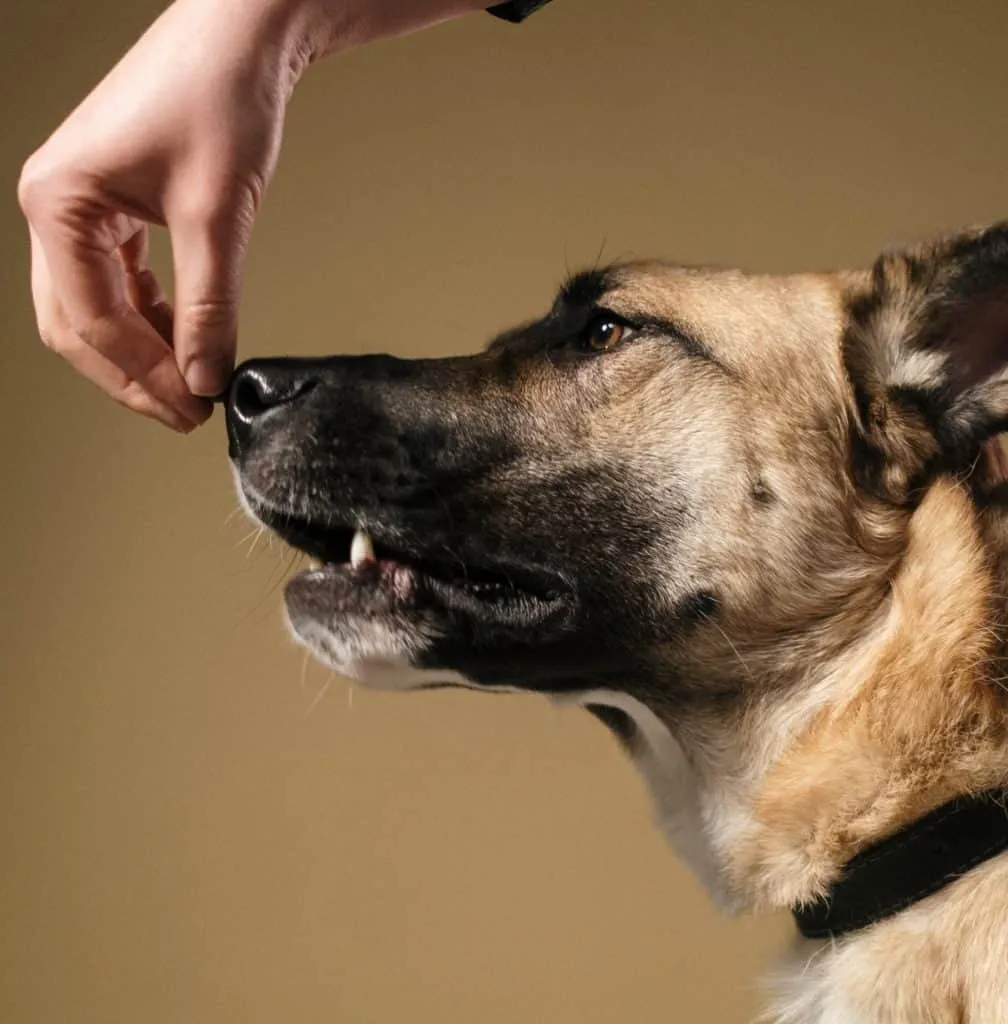
- Hold a treat in your open palm, about 6 inches from your puppy’s nose
- When your puppy moves toward the treat (which they naturally will), close your hand into a fist and say “no” in a calm, firm voice
- Wait for your puppy to stop trying to get the treat and look away or settle
- The moment they stop and show patience, praise them enthusiastically and give them a different treat from your other hand

Important: Do not yell or sound harsh. Use a firm but neutral tone. The goal is communication, not intimidation.
Step 2: Build Duration Gradually
Once your puppy begins understanding the basic concept:
- Repeat the exercise, but wait slightly longer before rewarding
- Work up to 3-5 seconds of patience before giving the reward
- If your puppy breaks and goes for the treat, simply close your fist again and restart
Step 3: Keep Sessions Short
Here is where many puppy owners make a critical mistake. Puppy attention spans are remarkably short:
| Age | Maximum Focus Time |
|---|---|
| 8-12 weeks | 2-3 minutes |
| 3-4 months | 4-5 minutes |
| 5-6 months | 6-10 minutes |
Train for 3-5 minutes maximum, then take a break. You can do multiple short sessions throughout the day (3-5 sessions is ideal), but never push past your puppy’s attention limit. Longer sessions lead to frustration for both of you and actually slow down learning.
When you notice your puppy losing focus, yawning, or becoming distracted, end the session on a positive note with an easy success and try again later.
Step 4: Test and Proof the Behavior
Once your puppy consistently waits when you say “no” with a closed fist, progress to the test:
- Place a treat on your open palm in front of your puppy
- Say “no” before they move toward it
- If your puppy freezes and waits, immediately praise and reward from your other hand
- If your puppy goes for the treat anyway, close your hand and return to Step 1
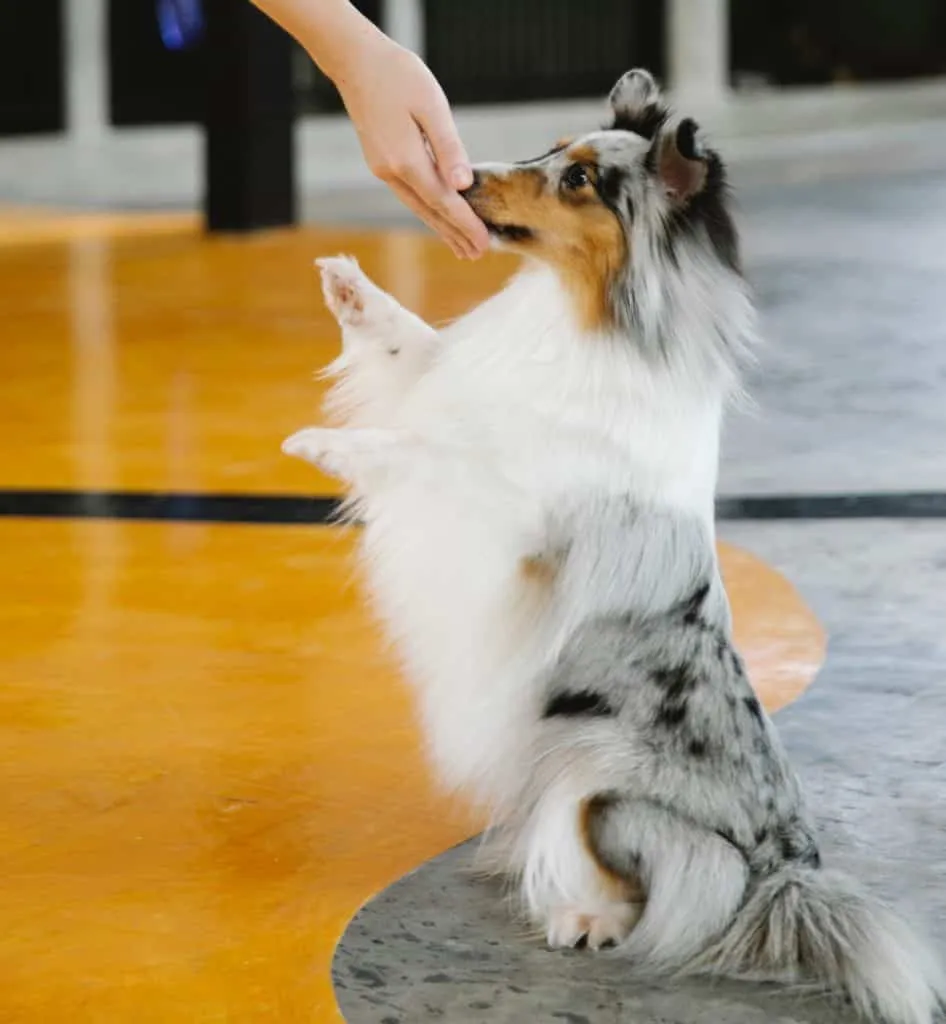
When your pup reliably passes this test, they understand the cue. You can then reward them with the original treat as well as verbal praise, a favorite toy , or a quick play session.
The Power of Consistency
Consistency is the foundation of successful puppy training. Here is what that means in practice:
Use the same word every time. If you choose “no,” always use “no.” Do not switch between “no,” “stop,” “don’t,” and “hey.”
Get everyone on board. Every family member must use the same cue word and follow the same training protocol. Inconsistent rules confuse puppies and slow progress.
Apply it uniformly. Once your puppy knows “no,” use it consistently whenever you need to interrupt unwanted behavior, whether that is chewing on furniture, jumping on guests, or getting into something dangerous.

Applying “No” to Real-Life Situations
Now that your puppy understands “no” in training exercises, you can apply it to everyday situations:
Counter surfing: When your puppy puts paws on the counter, say “no” and redirect them to a lying down position.
Inappropriate chewing: Say “no” when they start chewing something off-limits, then immediately offer an appropriate chew toy.
Jumping on people: Use “no” to interrupt the jump, then ask for a sit before allowing greeting.
Approaching hazards: “No” can stop your puppy from investigating dangerous items like electrical cords or toxic plants.

Remember: always redirect to an acceptable alternative. Telling a puppy “no” without showing them what to do instead leaves them confused. Pair your interrupter with a positive alternative they can perform successfully.
How Long Does It Take for a Puppy to Learn No?
There is no universal timeline for how quickly puppies learn this cue. Variables that affect learning speed include:
- Your consistency: Daily, structured practice yields faster results
- Puppy’s age: Younger puppies (8-16 weeks) are in their critical learning period
- Breed tendencies: Some breeds are more food-motivated or eager to please
- Training history: Puppies with positive training experiences learn faster
- Distraction levels: Start easy and gradually add challenges
Most puppies begin showing understanding within 1-2 weeks of consistent practice. However, proofing the behavior in various environments and situations can take several more weeks.
Professional dog trainers often see faster progress because they understand canine learning principles and can read subtle body language cues. If you are struggling, there is no shame in seeking help from a certified professional dog trainer.
What If My Puppy Does Not Respond?
If your puppy is not making progress after several weeks of consistent training, consider these factors:
Check your timing. Are you saying “no” at the exact moment the unwanted behavior begins? Late corrections do not register.
Evaluate your treats. Are they high-value enough? Try switching to something more enticing like small pieces of chicken or cheese.
Reduce distractions. You may be progressing too quickly. Go back to basics in a quiet environment.
Rule out underlying issues. Some puppies struggle with focus due to health issues, anxiety, or overstimulation. A veterinarian can rule out medical causes.
Consider professional help. If you have been consistent and patient but still struggle, consult a certified animal behavior consultant or professional dog trainer. There is no substitute for expert guidance when things are not working.
Why Teaching “No” Matters
Teaching your puppy an interrupter cue is about more than just stopping annoying behaviors. It is a foundation for:
- Safety: Preventing your puppy from ingesting dangerous items or running into traffic
- Household harmony: Establishing clear boundaries everyone can live with
- Future training: Building the communication skills needed for advanced commands
- Relationship building: Developing mutual understanding and trust
When you teach “no” using positive reinforcement methods, your puppy learns to trust your guidance. They understand that listening to you leads to good outcomes, which makes all future training easier.
Key Takeaways
- Choose one consistent word and stick with it
- Keep training sessions to 3-5 minutes maximum for puppies
- Use a calm, firm tone rather than yelling
- Always pair “no” with redirection to an acceptable behavior
- Reward the desired response immediately
- Never use physical punishment, as it damages trust and slows learning
- Be patient and celebrate small victories
Training takes time, but with consistency and positive methods, your puppy will learn to respond reliably to your “no” cue. Remember that every puppy learns at their own pace, and the journey of training together strengthens your lifelong bond.
If you need additional support, consider working with a professional trainer in your area who uses positive reinforcement methods. The investment in proper training pays dividends throughout your dog’s life.
Frequently Asked Questions
At what age can I start teaching my puppy 'no'?
You can begin teaching your puppy 'no' or 'leave it' as early as 8 weeks old when you first bring them home. Puppies during this critical socialization period (8-16 weeks) are highly receptive to learning. Keep sessions very short—just 2-3 minutes—and always use positive reinforcement with treats and praise.
Why doesn't my puppy listen when I say no?
Several factors may be at play: your timing may be off (say 'no' at the exact moment the behavior starts), the word may not have been properly trained, there are too many distractions, or treats aren't motivating enough. Also ensure everyone in your household uses the same cue consistently. If issues persist after 2-3 weeks of proper training, consult a professional dog trainer.
Is it bad to say 'no' to your puppy?
No, teaching an interrupter cue like 'no' or 'leave it' is an important part of puppy training. The key is HOW you teach it. Use a calm, firm voice (never yelling), pair it with positive reinforcement, and always redirect to an acceptable behavior. Avoid using 'no' constantly for minor things, as this reduces its effectiveness.
How long should puppy training sessions be?
Puppy training sessions should be very short: 2-3 minutes for 8-12 week old puppies, 4-5 minutes for 3-4 month olds, and up to 10 minutes for puppies 5-6 months old. Multiple short sessions throughout the day (3-5 sessions) are far more effective than one long session. Always end on a positive note.
Should I use 'no' or 'leave it' with my puppy?
Either word works as long as you use it consistently. Some trainers prefer 'leave it' because the word 'no' is often said in frustration in daily life, which can dilute its training effectiveness. Choose one word, ensure all family members use it the same way, and train it properly using positive reinforcement methods.
Personalized Training
Need Expert Dog Training Help?
Get matched with certified trainers in your area for personalized solutions.